Driveways Built to Handle Northern Weather
Gravel Driveways in Leonard for properties needing durable access routes and improved drainage performance
Seasonal freeze-thaw cycles, heavy snowmelt, and rural traffic patterns create specific challenges for driveways throughout northern Minnesota, where poorly constructed routes develop washouts, potholes, and uneven surfaces that worsen each year. Proper gravel driveway installation involves site preparation that addresses drainage first, followed by grading and gravel placement designed to maintain surface integrity through repeated seasonal stress. Reichert Excavating & Land Services LLC installs and repairs gravel driveways for homes, cabins, farms, and rural properties in Leonard, Park Rapids, Bemidji, and nearby communities where access routes must function year-round despite weather extremes that break down inadequate construction.
Installation begins with removing unstable topsoil and organic material, then shaping a crowned base that sheds water toward edges rather than allowing it to pool on the driving surface. A compacted subbase layer distributes weight and prevents the driveway from sinking into softer ground below, while the final gravel layer provides traction and a smooth driving surface. Proper crown angle—typically three to four percent slope from center to edge—determines whether water runs off cleanly or cuts channels through the gravel during rain events.
Request a driveway evaluation to identify grading requirements and estimate material needs for your property.
What Changes After Proper Driveway Installation
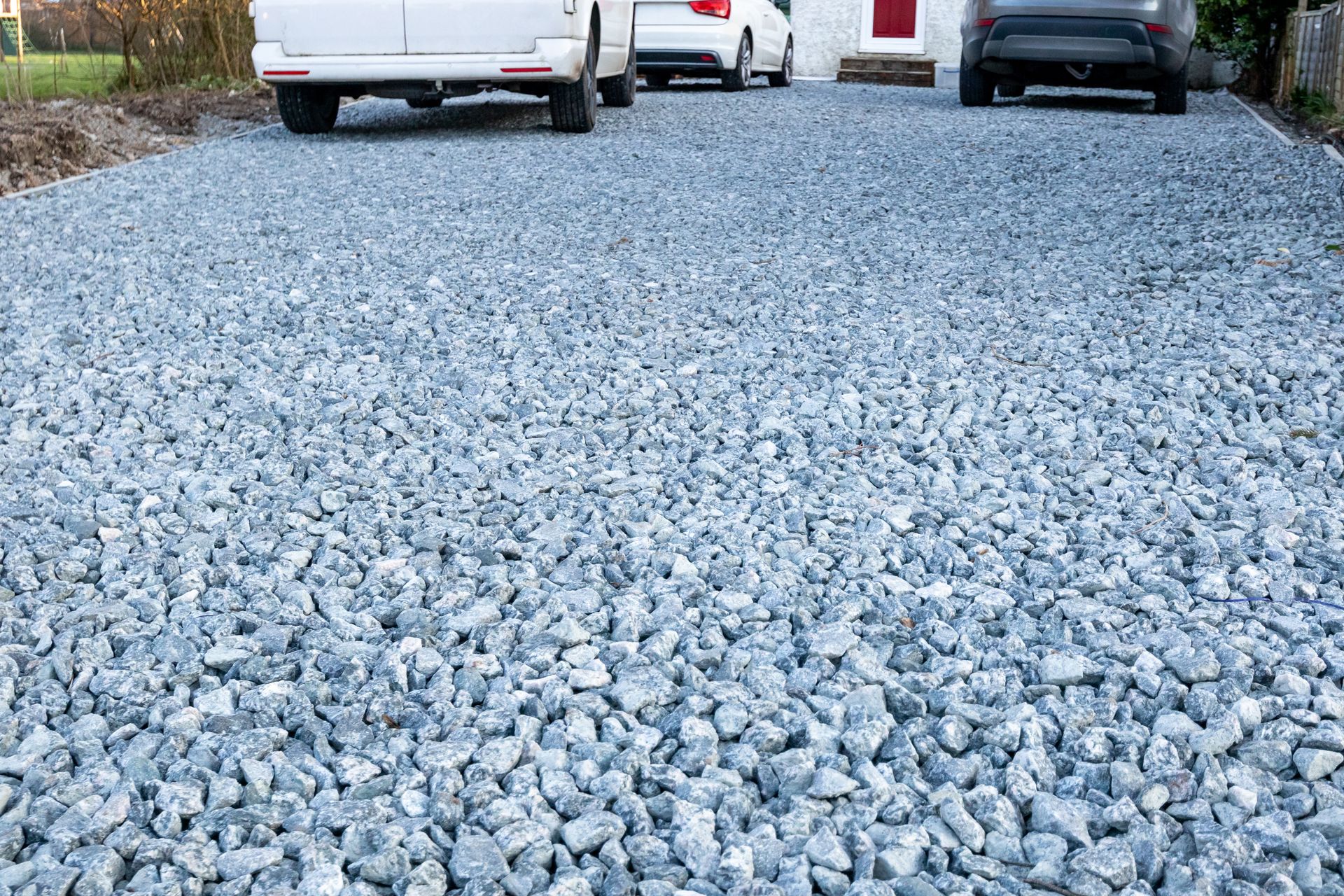
A correctly installed gravel driveway drains water consistently, resists pothole formation, and maintains a firm surface under vehicle weight throughout seasonal transitions. The crowned profile visible along the driveway's length directs runoff toward edges before it gains erosive force, while compacted base layers prevent the surface from shifting or developing ruts where vehicles repeatedly travel. Properties that previously required frequent regrading or showed persistent washouts develop stable access routes that need only occasional maintenance.
After installation, you see a level, crowned surface where vehicles travel without bottoming out or creating deep tracks, clean edges where water exits the driveway without washing gravel onto surrounding ground, and dry conditions where standing water previously collected after storms. Driveways that once required navigating around potholes and soft spots become reliable access routes for delivery vehicles, equipment, and daily traffic. Entryways remain cleaner because properly graded surfaces don't hold mud or generate dust clouds during dry periods.
Driveway longevity depends on base preparation quality more than gravel depth—insufficient subbase compaction allows driveways to settle unevenly regardless of surface material thickness. Climate factors specific to northern Minnesota, including frost heave and spring thaw, require base depths that extend below the frost line in critical sections. Traffic volume and vehicle weight also affect maintenance intervals, with farm equipment and heavy trucks demanding more robust construction than passenger vehicles alone.
Questions Before Starting Your Project
Driveway projects raise questions about materials, drainage, and long-term performance under local conditions.
What gravel types work best for Leonard area driveways?
Crushed angular gravel compacts more effectively than rounded stone, creating a stable surface that resists shifting, with local aggregate sources providing material proven to perform in northern Minnesota climate conditions.
How does proper drainage prevent driveway failure?
Drainage design that moves water off the surface before it penetrates the base layer prevents the washouts and soft spots that occur when water saturates and weakens underlying material.
When should existing driveways be repaired versus rebuilt?
Driveways with intact base layers benefit from grading and additional gravel, while those showing base failure—visible settling, persistent soft spots, or structural washouts—require excavation and base reconstruction.
Why do some driveways develop potholes quickly after installation?
Inadequate compaction or insufficient base depth allows the driveway to shift under traffic, creating voids where gravel displaces and potholes form during wet conditions or freeze-thaw cycles.
What maintenance extends gravel driveway life?
Periodic grading smooths surface irregularities before they worsen, while adding gravel every few years replaces material lost to traffic displacement and weather erosion.
Reichert Excavating & Land Services LLC completes driveway projects that address the specific drainage and durability challenges common across northern Minnesota rural properties. Contact us to schedule a consultation for new installation or repair of your existing gravel driveway.