Water Flow That Protects Structures and Roads
Ditching & Drainage Solutions in Leonard for sites experiencing erosion, flooding, and standing water problems
Standing water around buildings, driveways, and agricultural land indicates that natural drainage patterns can't handle runoff volumes generated during northern Minnesota rain events and snowmelt periods. Ditching and drainage work corrects these failures by creating graded channels that intercept water before it reaches problem areas and redirect flow to discharge points where moisture can disperse without causing damage. Properties throughout Leonard and surrounding communities face drainage challenges due to flat terrain, clay soils that resist infiltration, and seasonal water volumes that overwhelm inadequate or absent drainage infrastructure.
Effective drainage systems involve calculating where water collects, determining the grade required to move it elsewhere, and excavating ditches or swales that maintain consistent slope toward outlets. On rural properties, drainage often means creating roadside ditches that parallel access routes, installing culverts that pass water under driveways, and shaping berms that prevent field runoff from crossing into building areas. Reichert Excavating & Land Services LLC designs drainage improvements by observing existing flow patterns during wet conditions, then engineering solutions that work with natural topography rather than fighting it.
Request a drainage evaluation to identify problem areas and discuss grading solutions for your property.
Why Proper Drainage Prevents Long-Term Damage
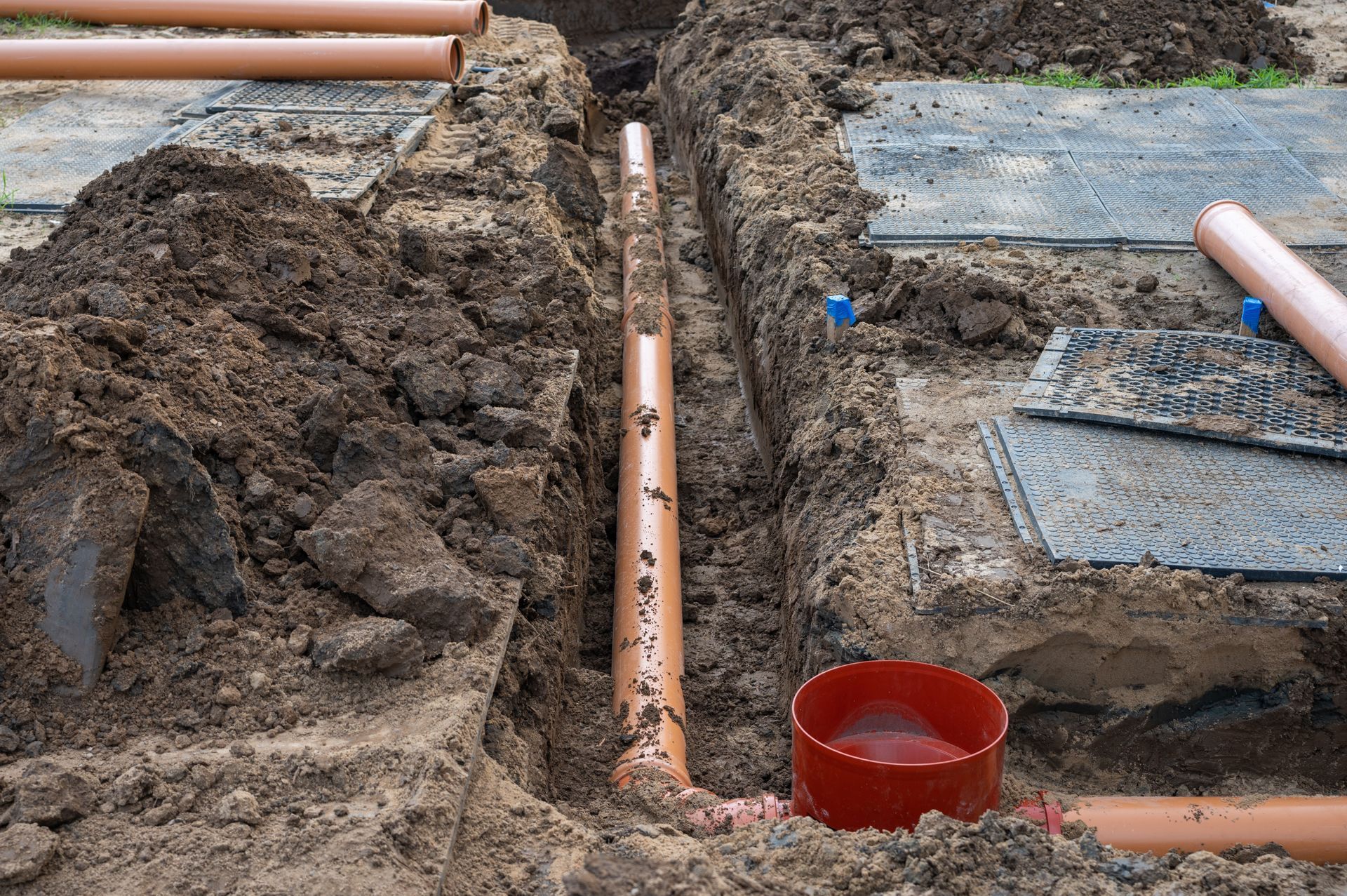
Drainage work intercepts runoff before it accumulates destructive volume, directing water along controlled paths where flow velocity stays low enough to prevent erosion while maintaining enough grade to avoid stagnation. Ditches excavated to specific depths and slopes move water predictably during storms, while proper outlet design prevents discharge areas from becoming new problem zones. Clay soils common in northern Minnesota require surface drainage since water won't percolate downward quickly enough to prevent pooling, making ditch placement and grade accuracy critical for system performance.
After drainage improvements, you see water moving visibly through ditches during rain events rather than pooling near foundations or access roads, dry ground conditions where standing water previously persisted for days after storms, and stabilized soil around buildings where erosion previously undermined structural supports. Driveways that once washed out during heavy rain now shed water to adjacent ditches before runoff gains erosive force. Agricultural land that held standing water becomes workable sooner after wet periods because drainage systems remove excess moisture efficiently.
Drainage design must account for upstream water sources—systems that only address on-site runoff fail when neighboring properties contribute additional flow that overwhelms ditch capacity. Seasonal considerations also matter, as spring snowmelt produces higher volumes than summer storms and requires larger ditches or additional outlet points. Maintenance access should be planned during installation so equipment can periodically clear sediment and vegetation that accumulate in ditches over time and reduce flow capacity.
What Property Owners Usually Ask
Drainage projects involve site-specific variables that make understanding process, timing, and expected outcomes important for property planning.
What determines ditch depth and width for effective drainage?
Ditch dimensions depend on the watershed area contributing runoff, soil infiltration rates, and the grade available between problem areas and discharge points, with larger contributing areas requiring correspondingly larger ditches.
How does drainage grading prevent erosion around buildings?
Grading creates positive slope away from foundations that moves water toward collection ditches before it saturates soil adjacent to structures, preventing the settlement and moisture intrusion that occurs when water pools against buildings.
When should drainage work be completed on Leonard properties?
Drainage installation proceeds most effectively during dry conditions when excavation equipment can access problem areas without creating additional rutting, though project urgency sometimes requires working during wetter periods before damage worsens.
Why do some properties need multiple drainage solutions?
Complex sites with varied topography, multiple water sources, or different land uses often require combined approaches—ditches for concentrated flow, swales for sheet runoff, and berms to redirect water away from critical areas.
What maintenance do drainage systems require?
Periodic ditch clearing removes sediment and vegetation that reduce flow capacity, while outlet inspection ensures discharge points remain functional and don't create downstream problems as conditions change.
Reichert Excavating & Land Services LLC completes drainage work on wooded, residential, and agricultural properties throughout the region where water management directly affects property usability and long-term stability. Reach out to discuss drainage challenges specific to your site and schedule an evaluation.